
FREE 3-PART MASTERCLASS
Watch The Free 2027 Panama Masterclass Today!
Simply enter your email address below and watch 3 unedited, on-demand streaming sessions with local lawyers & expat specialists.

Learn information on Panama Banking, including safety, interest rates, how to open a bank account, deposits, credit cards, and more.

Banks in Panama are known for their stability. They support the local economy and also cater to international companies that have selected Panama as their regional headquarters or residence.
For the last 30 years Panama has developed as the largest international banking center in Latin America. Here local law grants anyone who banks in this country the same rights as Panamanians.
Banking accounts for over 10% of the country’s Gross National Product. More than 80 banks are currently in operation, however this number is supposed to consolidate in years to come.
There are a number of international banks in Panama, including: Dresdner, Banco de Crédito del Perú, GNB Sudameris Bank S.A., Banco Davivienda Internacional, BPR BANK, S.A., St. Georges Bank, S.A., and BNP/Paribas, each with their own full-service branches in Panama City.
All banks are private with the exception of state-owned banks, Banco Nacional de Panama and Caja de Ahorros.
Bolsa de Valores de Panama, an active stock exchange, is the only dollar-based securities market in the region. The exchange is a private corporation listing about 100 companies.
Bank accounts in Panama are safe. This can be attributed largely to the fact that it is difficult to obtain a banking license. Tough laws and high standards are imposed on banks, especially after the revelations of the “Panama Papers”.
Panamanian banks tend to be very conservative and do not enter into risky lending practices. So, you must put down at least 10% for a mortgage as a resident.
Panama’s currency is the U.S. dollar, meaning no exchange risks for North Americans.
Opening a bank account in Panama as a foreign resident can be fairly easy process, however it can take a little time (things move a bit slower in here).
Although it can help for language barriers and expediency, you won’t need a lawyer to open an account.
Most banks will need:
Your passport Driver’s license One, possibly two bank reference letters from your home country A statement of your account in good standing from your bank Utility bill (some banks don’t require this, ask prior to going in for application) Personal recommendation from someone in Panama Most banks ask for a minimum deposit anywhere from US$50 to US$200
Once at the bank, you will be required to fill out all necessary forms. There is usually a bank manager or employee who can walk you through the process, often in English. The approval process can take a couple of weeks.
We recommend you maintain your bank account in the States at first—especially since you’ll need to be settled in Panama before you can even apply.
Savings accounts usually have around 3.5% annual interest, which is quite good. CDs (Certificates of Deposit) can offer up to 5% annual interest.
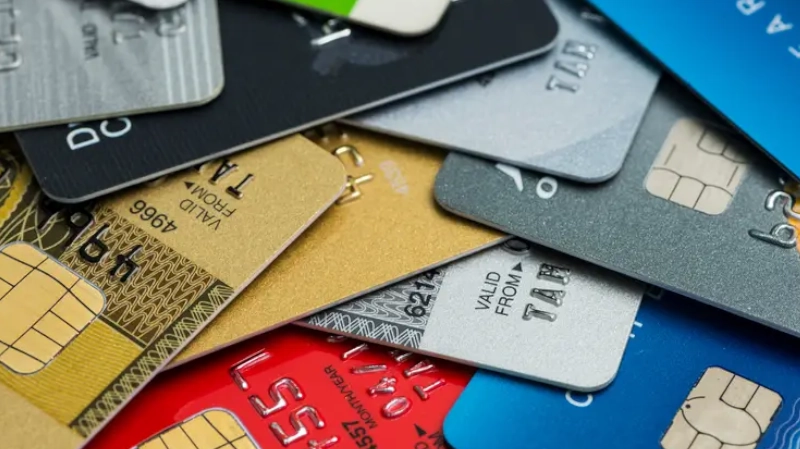
Most banks offer secured credit cards when clients place security deposit as collateral for the credit line equal to 125% of the credit limit. Annual fees start at US$50.
Most banks in Panama provide debit cards for their bank accounts. These cards usually feature Visa, MasterCard, or the “Clave” symbol. They can be used at any point of sale or ATM that accepts “Plus” or “Interlink” cards, which are recognized globally.
The annual fees for these debit cards range from US$15 to US$30. There are no fees for cash withdrawals at the bank’s ATMs, but there might be small fees for using ATMs from other banks or for purchases at certain merchants.
American Express, Western Union, and MoneyGram all have branches in Panama City.
Perhaps because you don’t like the idea of your available cash sitting 100% in U.S. banks… or all in U.S. dollars…
Or because you’d like to diversify and expand your investment options, again, beyond U.S. markets.
With everything going on in the world right now, more options for where to keep and how to access liquid assets are, like residency in another country, a critical priority.
Above all, your reasons for needing or wanting a bank account offshore help determine where best to open the account.
Panama is where tens of thousands of expats have already reinvented their lives, chased adventure, and retired well at a dramatically reduced cost…
And it’s where foreign investors continue to make money from both long-term capital growth and immediate cash flow.
Panama has far more to offer the global tourist than neighboring Costa Rica, the country it’s most often compared with…
Do Panamenian Banks Report To IRS?
The Panamanian and US governments share taxpayer info. Plus, Panamanian banks pass on US account holders’ account info to the IRS.
What Is The Superintendency Of Banks In Panama?
The Superintendency of Banks of Panama is an autonomous institution of the State. It regulates and supervises banks to ensure they are stable, dependable, and secure and ensuring that our money is safe.
Does Online Banking Service Have Any Cost?
The Superintendency Of Banks Of Panama recommends all clients ask their bank whether there is cost for this service.
Explore top living destinations, beach communities, highland havens, and city hubs across Panama.
Practical guidance for planning your life, move, retirement, property purchase, or investment in Panama.
About 10 years ago, expat Marla Paul founded a pet relocation service in Panama City designed to make moving across countries as smooth as…
Read InsightAI has no role at Live and Invest Overseas. Every time we allow AI into the conversation, we give up a little piece of your trust—and trust is the foundation of everything we do. Our strength is simple: real people speaking from real experience, in first person, telling real stories from the ground.
We will never publish AI-generated content. Not from ourselves, and not from anyone submitting to us. Our work is built on judgment, experience, trust, and what’s actually happening on the ground—not scraped summaries or recycled internet information.
When you read us, you’re reading lived experience. The stories, the insights, the perspective—that’s what AI can’t touch. And that’s exactly why we don’t use it.
Top Countries
Budgets
Resources
Real Estate
Conferences
Store
Free Report
© 2008 - Live and Invest Overseas - All Rights Reserved.