


FREE 3-PART MASTERCLASS
Watch The Free 2027 Belize Masterclass Today!
Simply enter your email address below and watch 3 unedited, on-demand streaming sessions with local lawyers & expat specialists.

Health care in Belize is below most international standards, but day-to-day ailments can be adequately treated—and at a reasonable price.
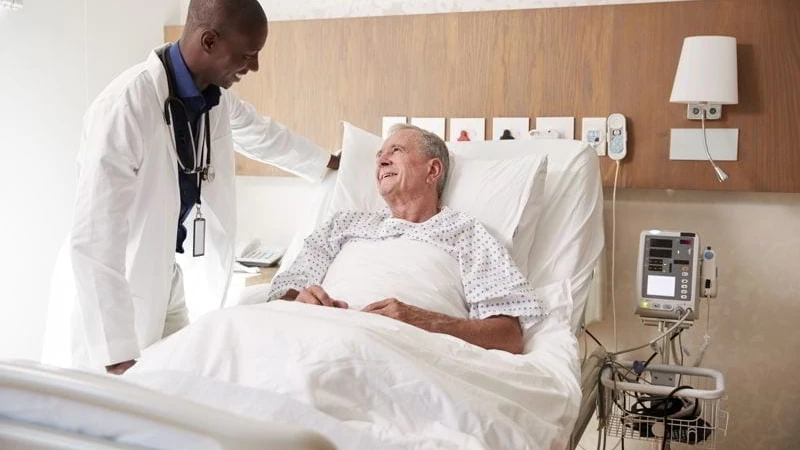
Retiring in Belize can be an attractive option for anyone who wants to move somewhere new. Of course, you likely have some questions about the health care Belize offers new residents.
The good news is that the health care system is relatively well-developed and robust. However, it is not equivalent to that of the United States or the European Union.
Health care in Belize is both public and private.
The Ministry of Health oversees the health sector and provides the majority of health care services to the population of Belize.
Most importantly, there are hospitals and clinics in every major city and town as well as many other population centers.
The majority of Belizeans receive free or low-cost care through the public health system. However, the public health system often has more demand than supply.
So, it is common for Belizeans who can afford it to take advantage of the private health care system.
Some doctors operate private practices offering services for fees.
The private health care industry in Belize is relatively small and only serves a niche portion of the population. This means these practices can focus more on quality of care and quality improvement.
As well, the private sector is still relatively inexpensive compared to private health care in many other countries, such as the United States.
Handling your basic health care needs in Belize is quite easy thanks to the public system.
Below are some of the steps and considerations you should be aware of when planning to move to Belize. With a little forethought, you can be prepared to meet all your health care needs.
Health care through the public system is available to everyone in Belize, both residents and visitors. This is typically sufficient to deal with routine healthcare and minor ailments.
The treatments are relatively quick and very inexpensive. A visit to the doctor will usually cost $15 to $20.
Many Belizeans rely solely on this system for their health care.
Many expats, retirees and wealthier locals prefer having the option of seeing specialists. These providers are usually at private practices.
While private healthcare is less expensive than in some other countries, the costs can add up, especially if you have a serious condition. Therefore, it is common to carry private medical insurance.
There are a few private insurers you can work with if you retire to Belize. Additionally, you may be able to use the same insurance you have in your home country.
Talk to your current insurance provider to determine if that is an option. Additionally, talk to your country’s embassy in Belize. They will have information on international insurance.
Although you may be able to find slightly cheaper health insurance than in the United States, don’t expect to save big on this expense.
These are some of the most popular insurance options:
In Belize City, the largest city, there are two very well-regarded practices: Belize Medical Associates and Belize Healthcare Partners. In other areas, simply ask for recommendations. Word of mouth is a great way to learn about good doctors in the area.
Many pharmacies in Belize are well-stocked with common medicines and are easy to work with. Simply look for a convenient pharmacy near you and consider asking neighbors for some recommendations.
As with most of the health care in Belize, it is easiest to find well-supplied pharmacies in major urban centers.
Many American retirees in Belize travel home for a few days each year to take advantage of their Medicare benefits. This is an especially common practice for people who have conditions that the Belizean health care system is not well-equipped to handle.
Although the health care Belizean hospitals can provide is fairly good, the country’s infrastructure is not sufficiently capable of handling major emergencies.
There is no level equivalent to a Level I trauma center in the country. Additionally, if you contract a very serious disease, the care may not be sufficient. Have a plan for where you will go if something major happens.
The solution for many people with serious conditions is to be flown to the U.S. for health care. However, this can be expensive. Consider evacuation coverage. This will help pay for an ambulance flight, which may cost $15,000 or more. This is especially worthy of consideration if you have any major chronic conditions.
Compared to many countries with advanced healthcare systems, such as the United States, Belize is very inexpensive.
The opportunity to have a visit to see a general practitioner for $20 or less can make handling your routine health needs very affordable. Additionally, most medicines can be found at a reasonable price.
Additionally, the health care in Belize can provide is more substantial than some other possible retirement destinations.
Although not as advanced as in some countries, the healthcare services in Belize are reasonably plentiful and high quality. There are many well-organized and well-run service providers that you can rely on for routine healthcare and treating minor ailments.
Overall, Belize is worth consideration for retirees, especially those who are in relatively good health. However, it may not be the country of choice for people who need regular care for more advanced diseases or chronic conditions.
One of the major challenges for health care recipients in Belize is the lack of a Level I trauma center equivalent. Even perfectly healthy people may get into a serious accident. This concern is something you should plan for no matter how healthy you are.
Another significant drawback is the lack of specialists and specialized equipment for complex diagnostic procedures or treatments.
The economy of Belize cannot support substantial investment in cutting-edge medical equipment or personnel. Again, you may want to consider traveling to Mexico or the United States to receive more advanced healthcare than what is available in Belize.
Belize does not have a medical marijuana program, and your U.S. medical marijuana card would not be recognized there. Marijuana is illegal but has been partially decriminalized since 2017. Possession of 10 grams or less on private premises, with the owner’s permission, will not lead to criminal charges. However, buying, selling, growing, importing, exporting, and smoking in public spaces remain criminal offenses.
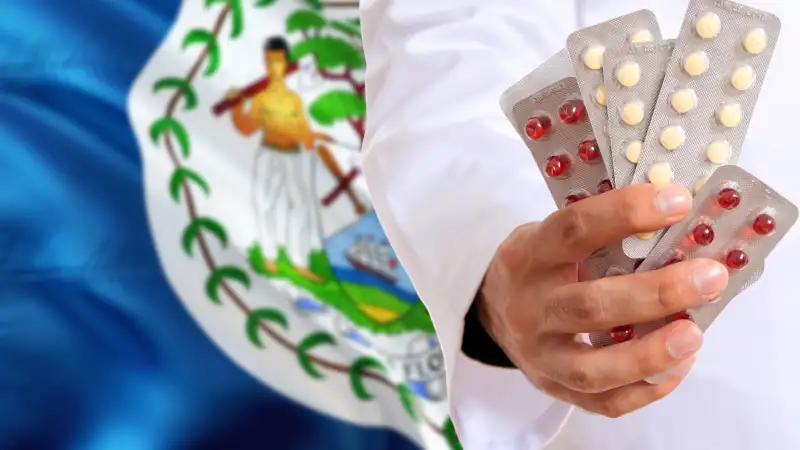
People who have serious health problems should hesitate before retiring in Belize.
While the country is equipped to handle routine health needs, it is not prepared for more complex diseases that require continued care.
Most importantly, some retirees have the option to move to Belize and return to their home countries for periodic care. Others can find sufficient facilities in Belize.
So, here are some common health problems and the level of care you can expect in the country:
Some of the private practices have reasonably developed facilities for treating arthritis. This includes surgery, medication, lifestyle guidance and more. Additionally, some retirees report reduced arthritic pain due to the climate in Belize. There may not be sufficient care for very severe cases, however.
Cardiovascular diseases account for about a quarter of deaths in Belize, according to WHO. However, this is similar to many other countries. Private practices can help with preventative care and there is some emergency care in the country. However, it may be difficult to get rapid and sufficient heart care at times.
There are not a lot of oncology practices in Belize. Anyone currently dealing with cancer should not move to Belize. While there may be sufficient treatment for relatively unaggressive cancers, more advanced ones require more care than Belize’s system can provide.
Respiratory diseases are relatively common in Belize. As with other serious medical issues, there are some treatment options available. For less severe cases, the providers in Belize are likely sufficient. However, for more advanced cases, it is worth seeking help elsewhere.
Treatment and care for Alzheimer’s are relatively primitive in Belize. However, this is true in a lot of places. Don’t expect to find memory units in retirement homes in Belize.
Care and medication for diabetes can be found relatively easily in Belize. The WHO has been working to improve diabetes care in the country. However, the country is poorly equipped to handle advanced or complex cases.
The treatment for osteoporosis in Belize is relatively undeveloped. Some private practices have basic facilities.

Explore top living destinations, beach communities, highland havens, and city hubs across Belize.
Practical guidance for planning your life, move, retirement, property purchase, or investment in Belize.
For me and Belize, it was love at first sight.From the first morning I arrived in Belize City, nearly 40 years ago, climbed down…
Read InsightAI has no role at Live and Invest Overseas. Every time we allow AI into the conversation, we give up a little piece of your trust—and trust is the foundation of everything we do. Our strength is simple: real people speaking from real experience, in first person, telling real stories from the ground.
We will never publish AI-generated content. Not from ourselves, and not from anyone submitting to us. Our work is built on judgment, experience, trust, and what’s actually happening on the ground—not scraped summaries or recycled internet information.
When you read us, you’re reading lived experience. The stories, the insights, the perspective—that’s what AI can’t touch. And that’s exactly why we don’t use it.
Top Countries
Budgets
Resources
Real Estate
Conferences
Store
Free Report

© 2008 - Live and Invest Overseas - All Rights Reserved.