


FREE 3-PART MASTERCLASS
Watch The Free 2027 Panama Masterclass Today!
Simply enter your email address below and watch 3 unedited, on-demand streaming sessions with local lawyers & expat specialists.

Santa Fe is a paradise for nature enthusiasts looking to live or retire in Panama. Here is how you can live with different budget examples.
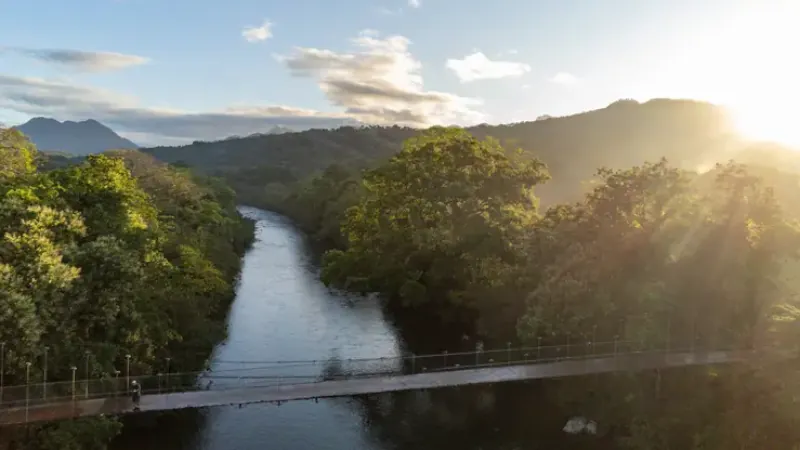
Located in Veraguas, Santa Fe is the only Panamanian province that reaches both the Caribbean and the Pacific Coast.
Some say the word Veraguas comes from ver (to see) and aguas (waters) which has been taken to mean seeing both coasts, or lots of rain (Santa Fe receives an average rainfall of 2,543 mm annually).
Santa Fe is a lovely mountain village with a small local population and limited infrastructure and services. It’s a beautiful, tranquil, picture-postcard highlands escape. Because of its altitude, the climate is more comfortable than down at sea level.
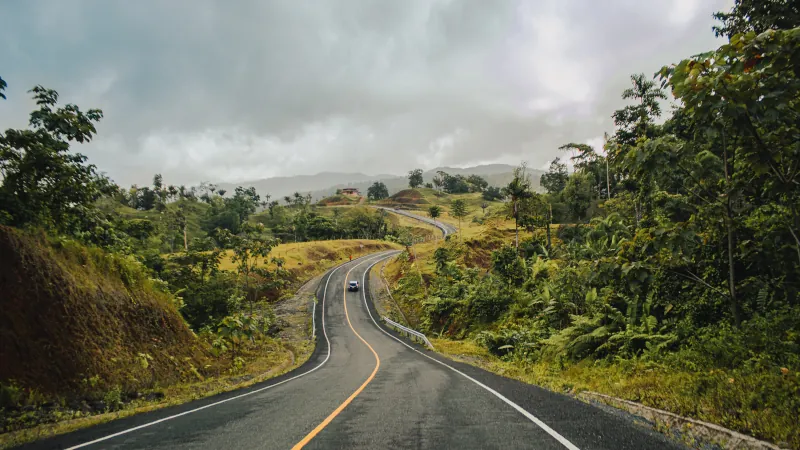
The drive from Panama City to Santa Fe takes around five hours, including one hour up a winding mountain road from Santiago.
The bus takes around six hours but you will need to change in Santiago. The trip costs around $20.
See our full guide to Panama’s visas and residency options—so you can understand the main pathways, what typically qualifies you, and what to prepare before you apply.
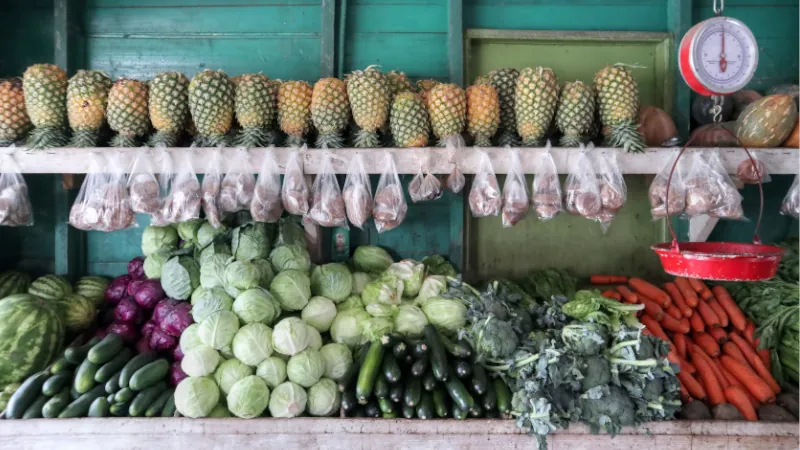
Life in Santa Fe is simple, safe, and super-affordable. For example, this is a place where a couple could live on about $1,200 per month if you’re up for going very local. In truth, you don’t have much of a choice.
Rentals in Santa Fe range between $300 to $700 a month. A two-bedroom, two-bathroom house with a sizeable backyard can rent for about $500 a month.
Property in Santa Fe will cost between $50,000 to $150,000. This’ll depend on the accessibility of the property and if it comes with an already-built house or not.
Santa Fe is a cool mountain town; you won’t need air conditioning if you choose to settle here. Counting the TV use, the fridge, and occasionally the use of fans, your electricity bill should come to about $50 per month.
Your water bill could come to about $5 per month and you’ll likely use two gas tanks for cooking per month which cost $5 each.
You’ll want Wi-Fi at home which usually comes in a package including telephone and cable TV for about $85. You could also just get the Wi-Fi alone and it’ll cost about $30.
Unless you live in a central part of town, you’ll need to use your car quite frequently. Your monthly gas should come to about $70 (depending on the car model). If you use public transportation, you should put about $30 aside per month. Again, this will vary on how far out you venture from the area you live in and how often.
Eating out twice a week at a local restaurant, the bill will be between $10 and $25 per person (depending on what you each order). You’ll pay about $2 for a local beer and about $20 for a bottle of wine.
Our best advice to cut down expenses in groceries is to eat locally. Purchase local fruits and vegetables, local beef, chicken, and fish, local dairy products, etc. That doesn’t mean you can’t splurge on an imported bottle of wine for instance. Eat the local way and your grocery bill should come to about $400 a month.
If you eat purely local products, you could bring down this down to about $300 per month.
| Expense | Monthly Costs | Notes |
|---|---|---|
| Mortgage | – | Not included here as too variable. |
| HOA Fees | – | No condos or housing developments here. |
| Property Taxes | – | |
| Transportation | US$100 | Fuel. Daily trips around town, and two trips to Santiago per month. |
| Gas | US$6.50 | 25 pounds (lasts two months or more). |
| Electricity | US$60 | Air conditioner in bedrooms and TV. |
| Water | US$6 | Unlimited (IDAAN in town). |
| Cell Phone | US$40 | Unlimited minutes, unlimited data. |
| Internet | US$33 | Wi-Fi only. |
| Cable TV | US$80 | With all the bells and whistles. |
| Household Help | US$120 | US$10 to US$20 daily wage, about three times a week. |
| Entertainment | US$100 | This includes the couples’ cost for eating out twice a week at a mid-range, local restaurant (US$8.50 per plate); local drinks twice a week at a nearby watering hole (US$1 national beer/US$3.50 glass of wine); movie theatre trip twice a month (US$4.75 per ticket). |
| Groceries | US$250 | Basic items for a couple. |
| Gym Membership | – | Hiking is free here. |
| Medical Appointment | US$15 | Without insurance at a private clinic in Santiago. |
| TOTAL | US$810.50 | Doesn’t include mortgage fee. |
| Expense | Monthly Costs | Notes |
|---|---|---|
| Rent | US$400 | In a desirable area, furnished, two-bedroom, comfortable apartment. |
| Transportation | US$100 | Fuel. Daily trips around town, and two trips to Santiago per month. |
| Gas | US$6.50 | 25 pounds (lasts two months or more). |
| Electricity | US$60 | Air conditioner in bedrooms and TV. |
| Water | US$6 | Unlimited (IDAAN in town). |
| Cell Phone | US$40 | Unlimited minutes, unlimited data. |
| Internet | US$33 | Wi-Fi only. |
| Cable TV | US$80 | With all the bells and whistles. |
| Household Help | US$120 | US$10 to US$20 daily wage, about three times a week. |
| Entertainment | US$100 | This includes the couples’ cost for eating out twice a week at a mid-range, local restaurant (US$8.50 per plate); local drinks twice a week at a nearby watering hole (US$1 national beer/US$3.50 glass of wine); movie theatre trip twice a month (US$4.75 per ticket). |
| Groceries | US$250 | Basic items for a couple. |
| Gym Membership | – | Hiking here is free. |
| Medical Appointment | US$18 | Without insurance at a private clinic in Santiago. |
| TOTAL | US$1,213.50 |
| Expense | Monthly Costs | Notes |
|---|---|---|
| Rent | US$150 | Cheapest part of town (still desirable), most basic one-bedroom rental. |
| Transportation | US$20 | US$5 roundtrip by bus to Santiago, twice monthly. |
| Gas | US$6.50 | 25 lbs. (lasts 2 months or more). |
| Electricity | US$35 | TV, fridge, and fans. No air conditioner. |
| Water | US$6 | Unlimited (IDAAN in town). |
| Cell Phone | US$15 | Local minutes. No data. |
| Internet | US$33 | Home Wi-Fi |
| Cable TV | US$26 | Basic (4 or 5 English channels). |
| Entertainment | US$50 | Two lunches and two dinners at cheap local places. |
| Groceries | US$250 | All local-brand items only. Shopping markets and local vendors along with grocery stores. |
| TOTAL | US$591.50 |
Average cost of drink and a sandwich/burger:
A beer: In a local bar 60 cents. In a local restaurant US$1.50. High end restaurant US$3.50.
Rum & Coke (or other local drink): US$4.
A coffee: US$1.50
A sandwich (or equivalent): Burger at Café Dorado is US$7.
Average cost of a meal out per person:
Lunch: US$4.25 typical plate.
Dinner: US$10.
Get a clear breakdown of everyday expenses in Panama—including housing, utilities, groceries, transportation, and healthcare—so you can budget accurately before you make the move.
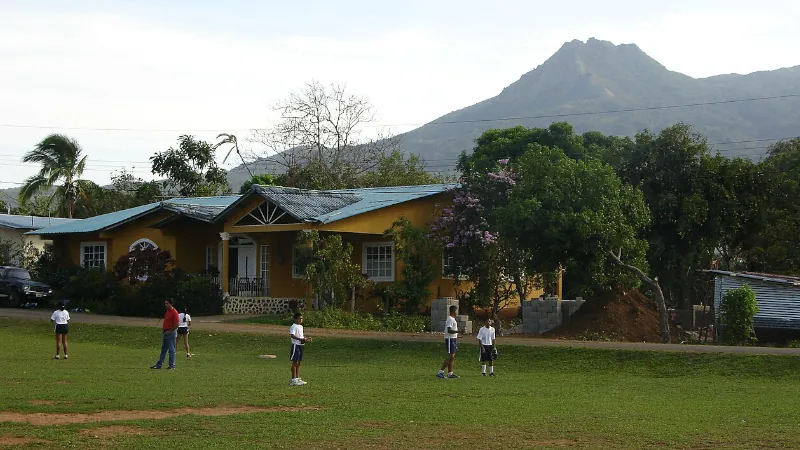
Santa Fe, Panama, is a generally safe small town located in the highlands of the Veraguas Province. However, we always recommend you follow standard safety practices no matter where you are in the world.
Keep your belongings such as wallets, purses, phones, and cameras on you at all times. Avoid keeping valuables on display. Make sure to lock your home and car when not around.
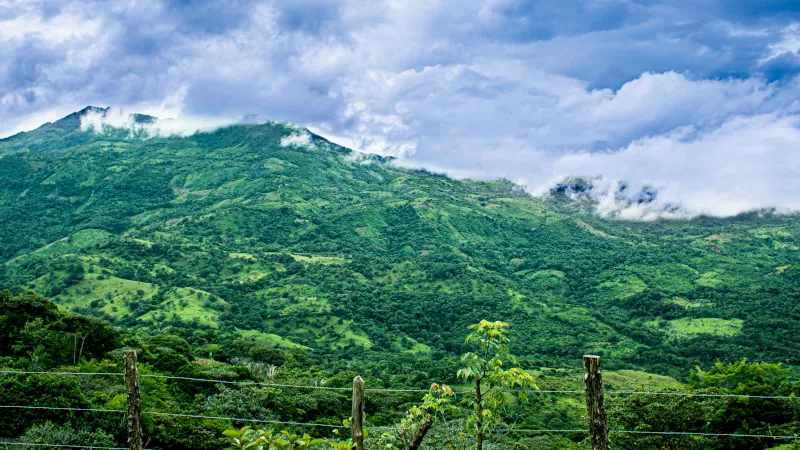
Surrounded by the Santa Fe National Park on three sides (72.636 hectares), rolling hills, and valleys in every direction, this quaint mountain town is rich with outdoor activities. Offering many of the same attractions as Boquete, with fewer visitors, you can hike, birdwatch, tube down the river, or tour the small El Tute Coffee Factory. Horseback tours and river kayaking trips through the national park to the Caribbean coast are also on offer.
Get a practical overview of living in Panama—including lifestyle considerations, local routines, and what newcomers typically wish they knew before moving.
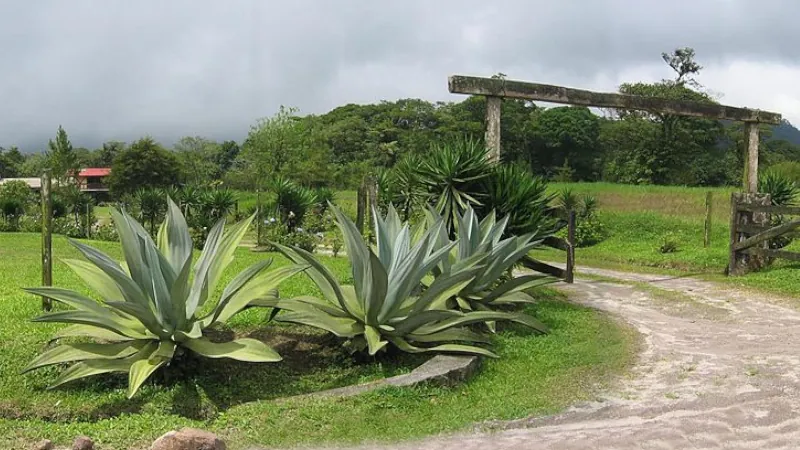
These days, days Santa Fe’s international community is growing. The foreign community is diverse. North Americans, Europeans, South Americans, and South Africans, among other nationalities, have chosen to live here.
It is worth mentioning that the expat community is spread out, as many people live quite isolated outside of Sant Fe Center. People stay happily busy working on their homes, in their gardens, and caring for animals.
Some foreigners have integrated into the local community, and, in general, most expats have a support system which includes local neighbors and/or trusted employees.
Santa Fe is a spot for the more pioneering expat and culture shock goes both ways here. You may be taken aback by the usual Panamanian experience; mañana mentality, paperwork upon paperwork for paying US$1 at the public health clinic, but don’t be surprised if a little indigenous lady in a traditional dress is shocked by your very presence.
The town serves as a commercial hub for the indigenous Ngöbe-Buglé (sometimes written Ngäbe) people living on the nearby comarca. It is worth mentioning that foreigners cannot own land in this area, nor in the Santa Fe National Park.
See what retirement can look like in Panama—including lifestyle considerations, practical planning tips, and what to expect as you explore your options.
Health care is more limited in Santa Fe than in other areas.
Because this is a small town that’s remained largely unpopulated until a few years ago, there are no major hospitals here. You can get basic needs addressed to, though.
Santa Fe has a small medical center where you can go for regular checkups and in case of an emergency that doesn’t require highly specialized equipment.
For more specialized care, patients will likely be patched up as best as possible at Santa Fe and then require transportation to nearby larger cities such as Santiago, David, or Panama City.
Santa Fe, Panama, also has a pharmacy where you can find over-the-counter drugs and basic supplies. However, if you suffer from a specific medical condition and require medications regularly, we recommend you buy a large batch and bring it along with you.
Calculate how long it’ll likely be until your next trip to one of the larger cities and purchase enough meds to cover that time.
Explore how the healthcare system works in Panama, what expats typically do for coverage, and what to expect for day-to-day care—so you can plan with confidence before you move.
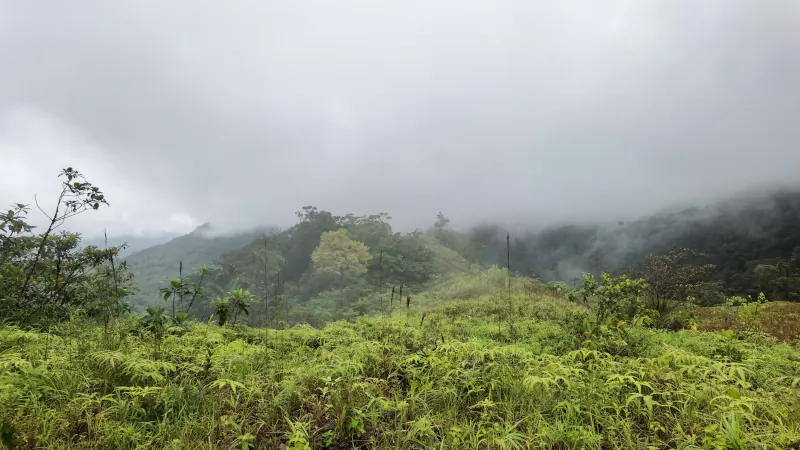
Santa Fe is set at 430 meters above sea level, not quite qualifying it as a cloud forest, but has that same mountainous, orchid, mossy terrain.
The average annual temperature in Santa Fe is nearly 76°F (24.4°C). Its cooler climate makes for a garden enthusiast’s dream and gives way to an economy which is primarily built on agriculture. Santa Fe is warmer (especially at night) and dryer than Boquete.
You can… but you’ll face frustrations and limit your experience and social network.
If you’re looking to retire or visit someplace where there isn’t a lot of noise, people are still friendly and not stressed, has a slower pace of living, and is surrounded by nature, then Santa Fe, Panama is worth visiting.
Santa Fe has a population of around 3,500.
Panama is full of pedestrian hazards… gaping holes on sidewalks and irrationally high curbs or stairs abound, and Santa Fe is no exception to this. The mountain roads are steep and narrow in town. Even drivers with nerves of steel will likely shudder at some of the sheer drops roadside and trusty trucks may still be challenged by some of the roads. And watch out for potholes!
Explore top living destinations, beach communities, highland havens, and city hubs across Panama.
Practical guidance for planning your life, move, retirement, property purchase, or investment in Panama.
About 10 years ago, expat Marla Paul founded a pet relocation service in Panama City designed to make moving across countries as smooth as…
Read InsightAI has no role at Live and Invest Overseas. Every time we allow AI into the conversation, we give up a little piece of your trust—and trust is the foundation of everything we do. Our strength is simple: real people speaking from real experience, in first person, telling real stories from the ground.
We will never publish AI-generated content. Not from ourselves, and not from anyone submitting to us. Our work is built on judgment, experience, trust, and what’s actually happening on the ground—not scraped summaries or recycled internet information.
When you read us, you’re reading lived experience. The stories, the insights, the perspective—that’s what AI can’t touch. And that’s exactly why we don’t use it.
Top Countries
Budgets
Resources
Real Estate
Conferences
Store
Free Report

© 2008 - Live and Invest Overseas - All Rights Reserved.